
The Father Who Was Absent, and the Sentence That Stayed
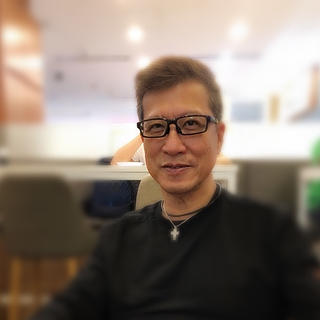

Today, in 2002, my father passed away.
Twenty-four years.
It is strange how time behaves when someone important has died. The calendar moves. Life continues. Work happens. Children grow older. Your own face changes in the mirror.
And yet, somewhere inside, certain memories remain untouched by time.
They do not age in the same way.
They sit quietly in us.
Not always asking for attention.
Not always causing pain.
But still there.
My father was, in many ways, an absent father.
That is the honest truth.
There were many things I did not receive from him. There were conversations we never had. There were moments when a father's presence would have mattered, but he was not there in the way I needed him to be.
As a son, that absence shaped me.
Not dramatically. Not always visibly. But deeply.
An absent father does not simply leave an empty chair. He leaves questions.
Was I seen?
Was I known?
Was I worth staying close to?
Was there something in me that did not invite love?
Of course, as adults, we may understand more. We may learn about generational wounds, cultural silence, emotional poverty, family hardship, personality, trauma, duty, survival, and all the things that shape how a person becomes who he becomes.
But the child in us does not begin with theory.
The child begins with longing.
The child waits.
And sometimes, that waiting continues long after childhood has ended.
I still remember one moment clearly.
I was probably in my late twenties or early thirties. I do not remember the full conversation. I do not remember where we were seated or what led to it. Memory can be funny like that. It forgets the furniture but keeps the sentence.
He said to me,
"I know you are capable."
That was all.
Not a speech.
Not an apology.
Not a long fatherly conversation.
Just one sentence.
And it stayed with me.
Perhaps because it came from a man who was not always present, those words entered a place in me that had been waiting for some form of recognition.
Not praise in the usual sense.
Not affection in the open, expressive way.
Not guidance.
Not intimacy.
Recognition.
He saw something.
Maybe only from a distance.
Maybe imperfectly.
Maybe without knowing what those words would mean to me.
But he saw something.
And I have carried that sentence for many years.
There is a particular kind of ache that comes from being seen by someone who could not fully show up.
It is not simple anger.
It is not simple love.
It is not simple grief.
It is a mixture.
The heart says, "You were not there."
And another part says, "But you knew something about me."
Another part says, "Why did you not say more?"
And yet another part quietly keeps the sentence like an old photograph.
This is why grief is rarely clean.
We often want our emotional lives to be tidy. We want to place people into clear categories. Good father. Bad father. Loving father. Absent father. Wounded father. Failed father.
But real life is not so obedient.
A father can be absent and still matter.
A father can fail us and still leave something behind.
A father can be emotionally limited and still carry quiet pride.
A father can hurt us not because he meant to, but because he did not know how to love in a way that could be felt.
This does not excuse the absence.
It simply allows the whole truth to enter the room.
And the whole truth is often the beginning of healing.
In many Asian families, love has not always been spoken in the language of emotional attunement. It has often come through duty, provision, worry, discipline, silence, sacrifice, and expectation.
A father may not say, "I love you."
He may say, "Work hard."
"Take care."
"Don't be careless."
"Can or not?"
"Be strong."
"You should know what to do."
Sometimes these words feel cold to the child who needed warmth.
And yet, hidden inside some of them may be concern, fear, hope, or pride that never found a softer language.
This is one of the great emotional complexities of growing up in many traditional families.
Love is present, but not always accessible.
Care exists, but not always in a form the nervous system can receive as care.
The child may be fed, housed, educated, and protected, yet still emotionally hungry.
That hunger does not disappear simply because we become successful.
In fact, sometimes success reveals it more clearly.
We become capable. Responsible. Reliable. Accomplished.
People look at us and assume we are fine.
But somewhere inside the capable adult is still the child who wanted to be seen without having to prove so much.
I wonder how many people live this way.
Externally accomplished.
Internally still waiting.
Waiting for a father's approval.
Waiting for a mother's tenderness.
Waiting for someone in the family system to finally say, "I see what it cost you to become who you are."
For some, this waiting becomes ambition.
For others, it becomes resentment.
For some, it becomes perfectionism.
For others, it becomes emotional distance. They learn not to need what was never reliably given.
And then, later in life, they wonder why intimacy feels unsafe. Why rest feels undeserved. Why praise is hard to receive. Why criticism lands too deeply. Why a small sentence can open an old room inside them.
My father's sentence was not enough to erase his absence.
No single sentence can do that.
But it was enough to show me that the story was not empty.
There was something there.
A trace.
A recognition.
A father's pride, perhaps hidden behind silence.
As I grow older, I find myself less interested in forcing people into innocence or guilt.
I am more interested in truth.
The truth that he was absent.
The truth that I was affected by that absence.
The truth that he may not have known how to be different.
The truth that I still wanted more from him.
The truth that he saw something in me.
The truth that one sentence stayed.
This is where my understanding of PATH becomes personal.
Not as a framework I apply to others. But as something I have had to live myself.
PATH, at its core, asks us to stand before the whole inheritance. What was given and what was not. What harmed us and what strengthened us. What we still long for and what we no longer need to chase. It does not ask us to silence any part of the story too quickly. It asks us to listen until the deeper pattern becomes clear.
In my own life, that meant holding the son who felt abandoned alongside the adult who understood his father's limitations. The part that longed for recognition alongside the part that learned to protect itself from disappointment. The part that treasured a single sentence alongside the part that wished there had been so many more.
In the Confucian tradition I grew up near, we are never isolated individuals. We are relational beings, formed through father and son, family and duty, ancestor and descendant. In Buddhist thought, clinging to one fixed version of the story — he was all bad, I am all healed, it is all resolved — creates its own suffering. The Daoist sensibility reminds me that not everything can be forced into closure. Some things soften only when we stop gripping them so tightly.
PATH brings these inheritances into the work of alignment. Not alignment as perfection. Alignment as truth held with compassion.
I do not need to make my father into a perfect man in order to honour him.
I do not need to erase his absence in order to acknowledge what he gave.
I do not need to deny my longing in order to be mature.
I do not need to remain angry in order to prove that the pain was real.
He was absent.
He was limited.
He was human.
And he was my father.
Somewhere in that imperfect fatherhood, one sentence still found its way to me.
"I know you are capable."
Perhaps healing begins when we can hold the whole truth without splitting ourselves apart.
The wound.
The longing.
The anger.
The love.
The inheritance.
The becoming.
All of it belongs to the story.
And when the story is held truthfully, it no longer has to rule us from the shadows.
It can become part of our wisdom.
Today, I remember my father.
Not perfectly.
Not sentimentally.
Not with bitterness.
Truthfully.
I remember the absence.
I remember the sentence.
I remember the young man who needed to hear it.
And I honour the older man I have become, who can now hold both the ache and the blessing without needing to choose only one.
Father, you are home now, with the Lord. And I think you knew something about me before I fully knew it myself.
You were right.
I was capable.
And maybe, in my own way, I have spent my life becoming the man you once saw from a distance.
That, too, is part of my PATH.
Not a straight road.
Not an easy one.
But a movement toward alignment.
A movement toward harmony.
A movement toward peace.
Ivan writes from his own ongoing journey of alignment, not only from his training.
Dr. Ivan Zy Lim 林忠岳博士 is a clinical psychologist, organisational consultant, and the creator of PATH (Psychology of Alignment Toward Harmony), a psychological framework rooted in Chinese philosophical traditions that understands well-being as the dynamic alignment of the self, relationships, and life. He works with leaders and organisations globally.

Comments